The International Shibari Film Festival (ISFF) held its first edition on July 2 at Cinéma Aventure in Brussels.
The program featured 18 films from 14 countries, divided into three categories: Cinema & Narrative, Live & Performances, and Singular Perspectives. Tickets sold out.
Awards were decided through a weighted voting system: 70% from the attending audience and 30% from a professional jury made up of film industry specialists, members of the international shibari community, and cultural sector professionals.
Grand Prize
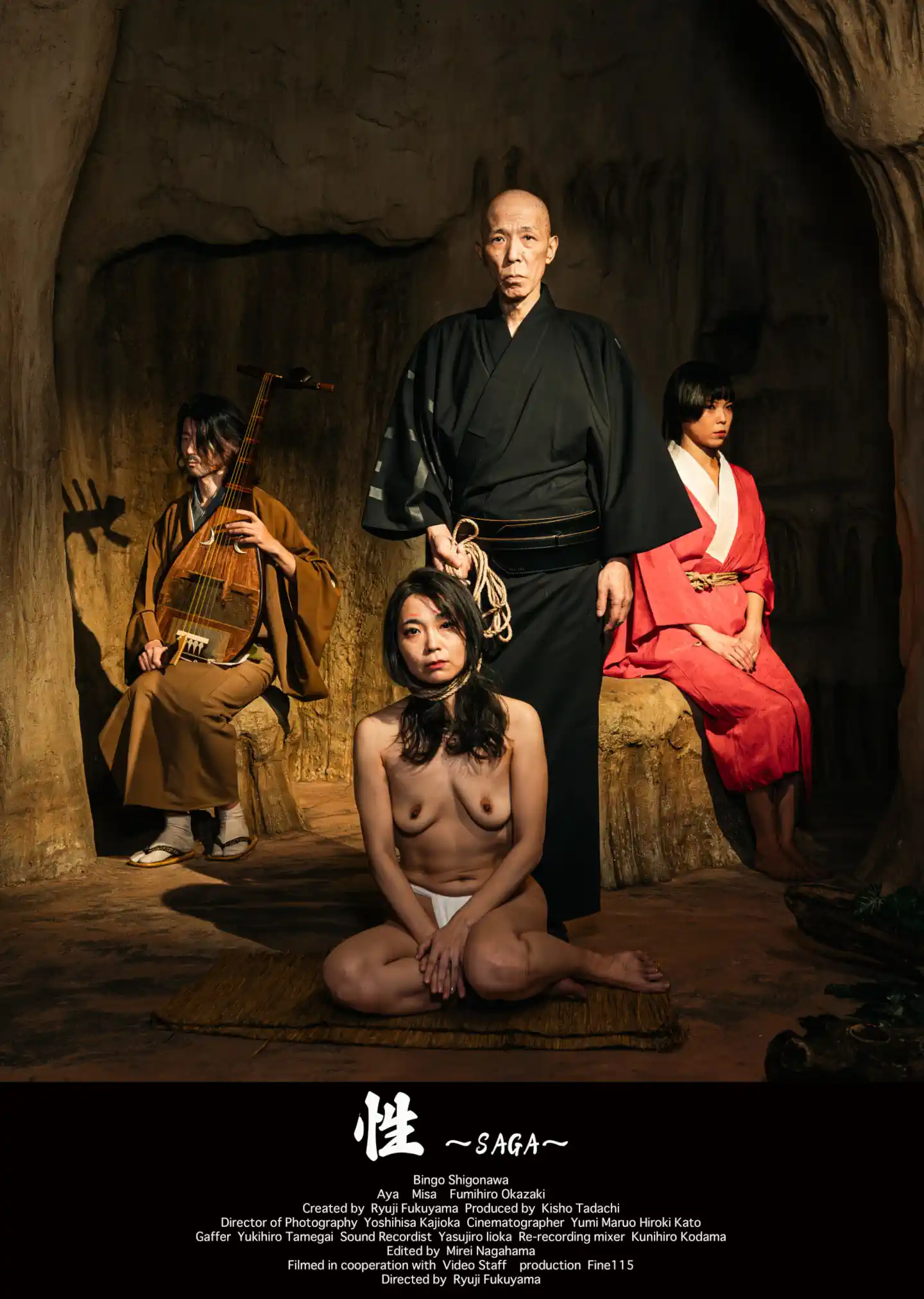
“性 ~SAGA~,” directed by Ryuji Fukuyama, took home both the Grand Prize and the award for Singular Perspectives.
The piece is structured as a double feature: a 15-minute narrative short exploring the aesthetics of traditional Japanese bondage, followed by a 35-minute documentary centered on Shigonawa Bingo (紫護縄びんご) alongside Aya, his rope partner and wife.
Shigonawa Bingo passed away on November 23, 2025, one day after attending the Tokyo premiere. The documentary captures his technique and his approach to vulnerability, intimacy, bodily communication, and trust.
“性 ~SAGA~” had a prior screening on June 26 at il Kino (Berlin), organized by the Kinbaku Society of Berlin, with English subtitles and a post-screening Q&A with the director.
Cinema & Narrative
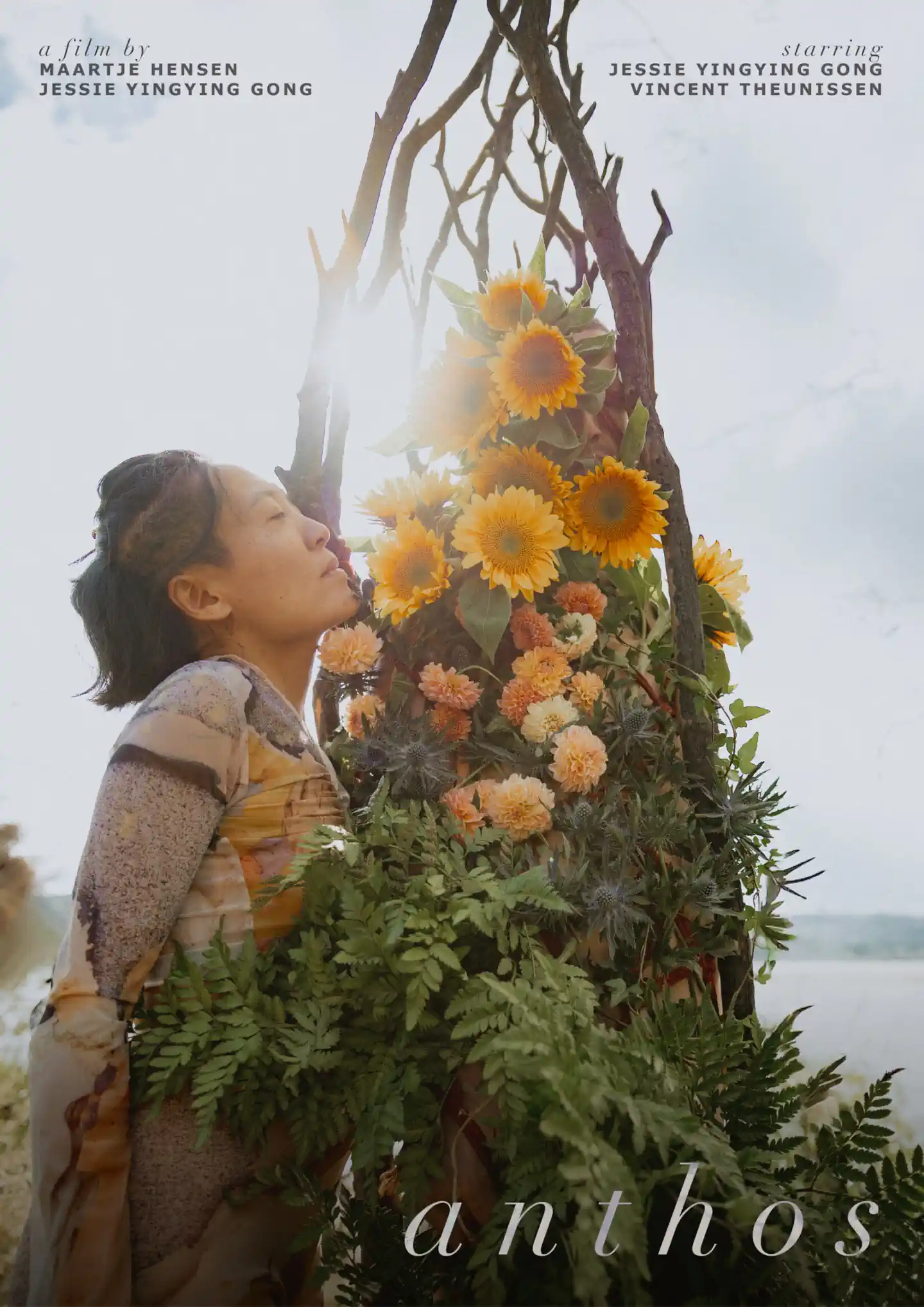
The award went to Anthos, co-directed by Maartje Hensen and Jessie Yingying Gong (Netherlands / Greece). According to the official synopsis, it explores regeneration, intimacy, vulnerability, and care through two bound bodies set against a scorched landscape.
Live & Performances
The award went to Triton, by Raphaël (Belgium). The official synopsis draws on the figure of the newt as a marker of a healthy ecosystem to narrate the encounter between the two performers.
Beyond the Festival Itself
From a personal standpoint—and without diving into a piece-by-piece critique—what emerges from the festival itself, and what seems to reflect the broader European scene, is something closer to a collection of personal micro-worlds than a coherent narrative process with shibari as the common thread.
Much like in the live scene, each selected work builds its own author-driven mythology: the artist and their ego, the rope as a vehicle for individual poetics rather than a shared technique.
Even “性 ~SAGA~,” the piece most directly tied to a specific figure and a “Japanese” tradition, ultimately unfolds in a deeply Western language: elegy, tribute, artistic gesture.
Nothing here points back to Japanese shibari as it appeared in venues like Kitan Club or the clubs of Kabukicho—that strain of shibari that openly embraced the pornographic as a mode of expression. Instead, what we see leans more toward a kind of bourgeois auteurist exercise.
In that sense, the festival brings into focus a sanitized version of shibari: relocated into the realm of art precisely so it can be stripped of its explicit erotic edge, polished until it becomes presentable, exportable, and easy to program in a Brussels cinema before a culturally minded jury.
Mainstream in the worst way—not because it reaches a wide audience, but because it has sanded down exactly what once made it distinct.
It is worth pushing the reflection a bit further. Shibari in late 20th-century Japan was, to a large extent, a mirror of its society: its tensions, its relationship with the body, with power, with transgression.
If we accept that reading, then what this festival reveals—what gets rewarded, what kind of language is validated, what is framed as “depth”—also acts as a mirror, but this time of contemporary European society: adrift, overfed, worn out by excess and convenience, and eager to turn anything—including rope—into a consumable product with an intellectual veneer, rather than sit with the discomfort of what the practice was and still is at its core: an expression of human erotic experience.