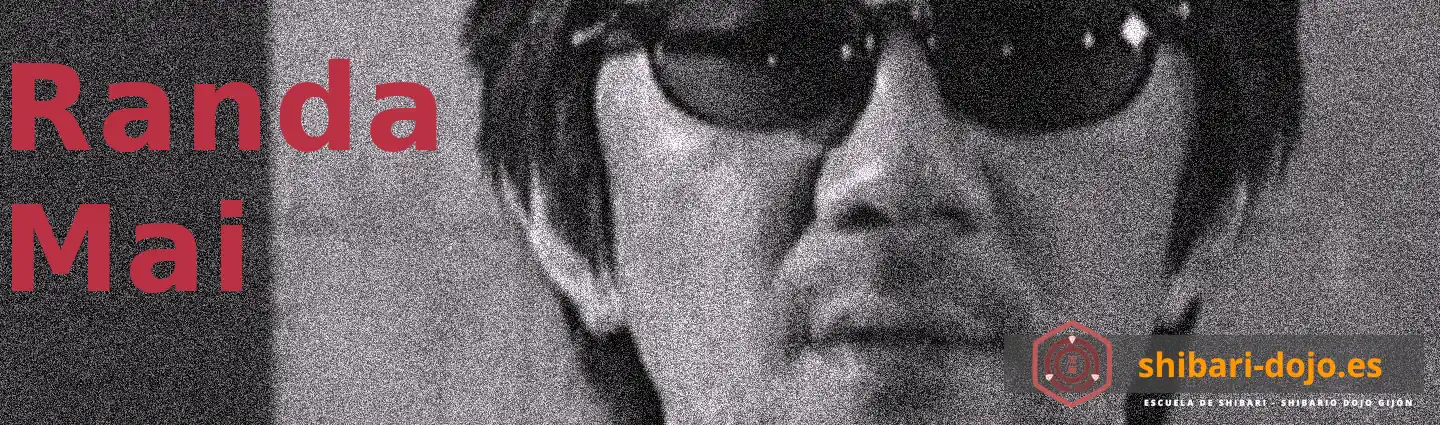
Randa Mai 乱田舞 might not ring a bell for those new to the shibari scene, but when I was cutting my teeth in this world—over 20 years ago now—he was a game-changer for me. His influence profoundly shaped how I approached, understood, and lived shibari in those early days.
Today, I’m dusting off and updating his biography, originally published after his passing a few years back.
This isn't your typical tribute piece; I’m using this opportunity to reflect on aspects of shibari we often gloss over—whether out of ignorance or a reluctance to face them head-on.
One telltale sign that shibari is entering a new chapter is the passing of the torch to a new generation.
Randa Mai launched his career in the adult industry during the 1990s, collaborating with various SM-themed magazines. That’s where his distinctive shibari style emerged—one characterized by an emphasis on whips and physical discipline. His approach mirrored the harsh economic and social realities of Japan at the time, during a period of deep financial crisis.
His look was iconic: loose black loungewear, dark sunglasses, a scraggly beard, chomping gum with a cocky swagger that radiated confidence.
I still remember those early 2000s days when his grainy VHS-rip videos circulated on dubious pirate porn sites. They were among the only audiovisual glimpses of shibari we could access from this side of the world.
His work with Attackers, alongside other riggers like Arisue Go, deserves a special mention.
Randa Mai was among the first to compensate his models for the marks left on their bodies—marks that often kept them from working non-SM gigs, always a marginal niche.
Beginning in 2016, he ran an SM bar called Ranbukan (a.k.a. Bar Randa Mai).
His life and career were bound up with late nights, heavy drinking, and struggles with other addictions.
These issues pushed him to the edges of the scene, where younger Japanese riggers viewed him as a bit of an outcast—someone to avoid if you wanted to keep your distance from the underground.
Nevertheless, many of his students still speak fondly of him, both as a teacher and as a person.
Back in the early 2000s, Randa Mai was a dominant force in Tokyo’s shibari scene, stepping in to fill the void left by Akechi Denki (who died in 2005).
During that time, Nawashi Kanna had withdrawn from public view, Naka Akira was focused almost exclusively on video production, and up-and-coming riggers like Hajime Kinoko and Yagami Ren were either just starting out or had yet to discover shibari.
It was during this era that Randa Mai developed a complicated relationship with Natsuki Aoyama 青山夏樹, his deshi, who would later take on the name Nidaime Randa Mai 二代目 乱田舞 (Second Generation Randa Mai).
Their bond was turbulent, marked by tension and the same rough edge that defined Randa Mai himself.
As recently as summer 2024, Natsuki Aoyama has been seen wearing the dragon emblem—a nod to Randa Mai’s trademark shirts—and appears to be stepping into the role of heir to his style.
While not universally credited, Randa Mai is often recognized for pioneering the stunning act of swinging atop a gyaku-ebi tsuri—that iconic image of the rigger perched above the horizontally suspended body of a bound partner.
His approach to shibari was a world apart from the way it’s often practiced today, especially in the West. His lifestyle, too, was intense—some might say too raw or too rough.
That lifestyle took a toll. His health quickly declined, with bone and neurological issues sending him into surgery and eventually forcing him to withdraw from professional work.
I recall a conversation we had years ago in which he expressed deep regret over how his choices had driven a wedge between him and his family, who ultimately turned their backs on him during his darkest days.
One of the few sources of information about him outside Japan was an interview conducted by Osada Steve around 2000.
In that interview, Randa Mai used bunraku—traditional Japanese puppet theater—as a metaphor for his role as Bakushi on stage:
The nawashi should stay in the background. The spotlight belongs to the woman shaped by the ropes, like a puppet animated by unseen hands. I see myself as a kuroko (黒子), those black-clad figures who manipulate the puppets in bunraku.
He also touched on a concept that stuck with me: kokoro byouki (心病気), or “heart-sick” people.
These are folks who struggle daily to manage their emotions, settling into a life that feels dehumanizing. Formalities, obligations, and endless “shoulds” and “musts” drown out their ability simply to be. Sooner or later, stress and exhaustion take over.
Randa Mai described those who came to his private sessions in these terms—people seeking not pleasure, but escape through pain. For them, the brief moments of aftercare following a session were the only times they allowed themselves to feel comforted or cared for.
That’s a gut-punch. It’s a far cry from the erotic essence of shibari. It’s a hollow imitation of life.
Emotional hygiene isn’t something you can just put off indefinitely—it’s not optional.
In the final months of his life, Randa Mai worked with Hana Kanno on what would become his last film. Recently out of hip surgery, he relied on orthopedic aids to move about, barely able to rise from his wheelchair.
This is a hard reality for many Japanese Bakushi as they age or fall ill: many continue working, not from passion, but out of financial necessity. We shouldn’t sugarcoat it with romantic ideals.
Randa Mai’s story should give us pause—a moment to reflect on what truly matters, on chasing fleeting illusions, and on approaching shibari with authenticity (honki 本気), focusing on its core: a lived, erotic experience.
Rest in peace.
Este contenido está reservado exclusivamente para suscriptores.
En nuestra página de suscripciones encontrarás varias opciones: la suscripción Kenkyo te da acceso completo durante 1 año a todos los artículos y recursos premium (no incluye los cursos), mientras que las otras suscripciones están pensadas para quienes también quieran acceder a los cursos y formaciones.
Ver todas las opciones de suscripción
This content is reserved exclusively for our subscribers.
We have different subscription plans to suit your needs: Kenkyo gives you 1 year of unlimited access to all premium articles and resources (courses not included), while our other plans are perfect if you also want to join the courses and training programs.